How to Verify Crypto Addresses and Avoid Payment Detail Substitution
Sending cryptocurrency is irreversible by design. Once a transaction is confirmed on the blockchain, there is no central authority to cancel or recover it. This makes accuracy when entering wallet addresses absolutely critical. In 2026, scams involving address substitution, clipboard hijacking, and phishing interfaces remain among the most common causes of lost funds. Understanding how these attacks work and how to verify details properly is now a basic requirement for anyone handling digital assets.
Common Risks When Sending Cryptocurrency
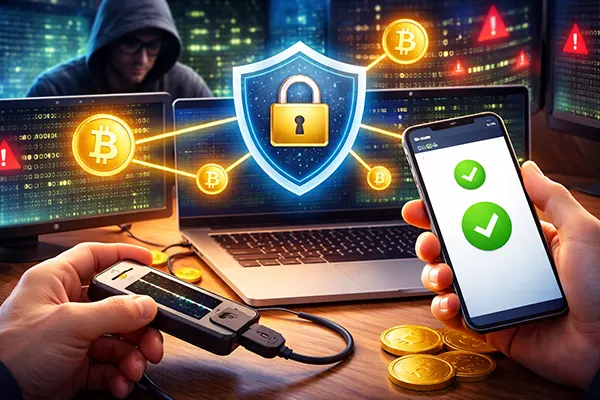
One of the most frequent threats is clipboard malware. This type of malicious software monitors copied data and replaces wallet addresses with those controlled by attackers. A user may copy the correct address, paste it into a wallet, and unknowingly send funds elsewhere. These attacks are particularly widespread on compromised desktop systems and unofficial mobile applications.
Phishing interfaces also play a major role. Fraudulent websites mimic legitimate wallets or exchanges and display altered deposit addresses. Even experienced users can be misled if they access services via unofficial links or search engine ads. Attackers rely on small visual differences in URLs or domain names to trick users into trusting fake interfaces.
Another risk comes from human error. Crypto addresses are long, case-sensitive strings, and even a single incorrect character can redirect funds permanently. Unlike traditional banking systems, there is no fallback verification layer, which means accuracy must be ensured before every transaction.
How Address Substitution Attacks Work
Most substitution attacks rely on automation. Malware scans the clipboard for patterns resembling crypto addresses and replaces them instantly. This process happens in milliseconds, often without any visible indication. The user proceeds as usual, unaware that the address has been altered.
In phishing scenarios, attackers embed their own addresses directly into fake interfaces. When users request a deposit address, the system generates a malicious one instead of the legitimate destination. Since the interface appears authentic, users often skip additional checks.
Some advanced attacks combine both methods. For example, a compromised browser extension may intercept wallet interactions and modify addresses during the transaction process itself. This makes detection more difficult and highlights the importance of verifying data at multiple stages.
Reliable Methods to Verify Crypto Addresses
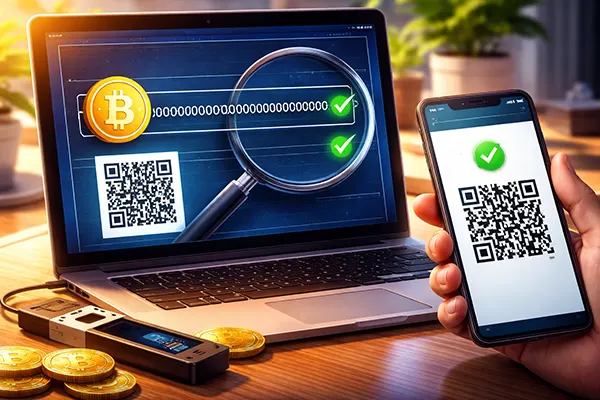
The most effective method is manual verification of the first and last characters of the address. While it may seem basic, this approach significantly reduces the risk of substitution. Attackers typically generate addresses with different prefixes and suffixes, making discrepancies noticeable when checked carefully.
Using QR codes instead of copy-paste operations can also improve security. When scanning a QR code from a trusted source, the risk of clipboard manipulation is eliminated. However, it is still important to confirm that the QR code originates from a legitimate interface.
Hardware wallets provide an additional layer of protection. These devices display the destination address on a separate screen, allowing users to verify it independently from potentially compromised computers or smartphones. This separation is considered one of the most reliable safeguards currently available.
Tools and Practices That Improve Accuracy
Address whitelisting is a practical feature offered by many exchanges. It allows users to save trusted addresses and restrict withdrawals only to those entries. Even if an attacker gains access to an account, they cannot redirect funds to a new address without additional verification steps.
Blockchain explorers can be used to confirm address history. Before sending funds, users can check whether an address has previous activity and whether it matches expected transaction patterns. While this does not guarantee safety, it adds an extra layer of due diligence.
Another useful habit is sending a small test transaction before transferring a larger amount. This approach allows users to confirm that the address is correct and that funds are received as expected. It may involve minor additional fees, but it significantly reduces the risk of major losses.
Best Security Practices for 2026
Keeping devices clean and updated remains essential. Installing software only from official sources and avoiding unknown browser extensions reduces the likelihood of malware infections. Regular system scans and updates help maintain a secure environment for transactions.
Two-factor authentication should always be enabled on wallets and exchanges. While it does not directly prevent address substitution, it protects accounts from unauthorised access, which is often part of broader attack strategies.
Users should also be cautious with public Wi-Fi networks. Transactions performed over unsecured connections may expose sensitive data or increase the risk of interception. Using a secure, private network or a trusted VPN adds an extra layer of protection.
How to Build a Safe Transfer Routine
A consistent routine reduces the chance of mistakes. This includes verifying the source of the address, checking its structure, and confirming it on a secondary device if possible. Repetition of these steps helps build reliable habits over time.
Separating devices for different tasks can further improve security. For example, using one device for communication and another for transactions limits the attack surface. This approach is increasingly recommended for users handling significant amounts of cryptocurrency.
Finally, staying informed about current threats is crucial. Attack techniques evolve constantly, and awareness of new methods helps users adapt their security practices. Reliable information sources and regular updates play an important role in maintaining long-term safety.